Eliminate Cloud Downtime With Predictive Network Monitoring
Over 90% of businesses now rely on cloud services to run their operations. But here's the uncomfortable truth: the average enterprise experiences 14 hours of unplanned downtime per year, costing an estimated $5,600 per minute. For organizations where cloud applications drive revenue, customer engagement, and internal productivity, even a brief outage creates a chain reaction -- failed transactions, frustrated users, SLA penalties, and reputational damage that lingers long after systems come back online.
The traditional approach to network management is reactive: something breaks, an alert fires, and engineers scramble to fix it. That model worked when infrastructure was simpler. In today's cloud environments -- with auto-scaling workloads, multi-cloud deployments, and distributed microservices -- reactive monitoring means you're always catching problems after they've already impacted users.
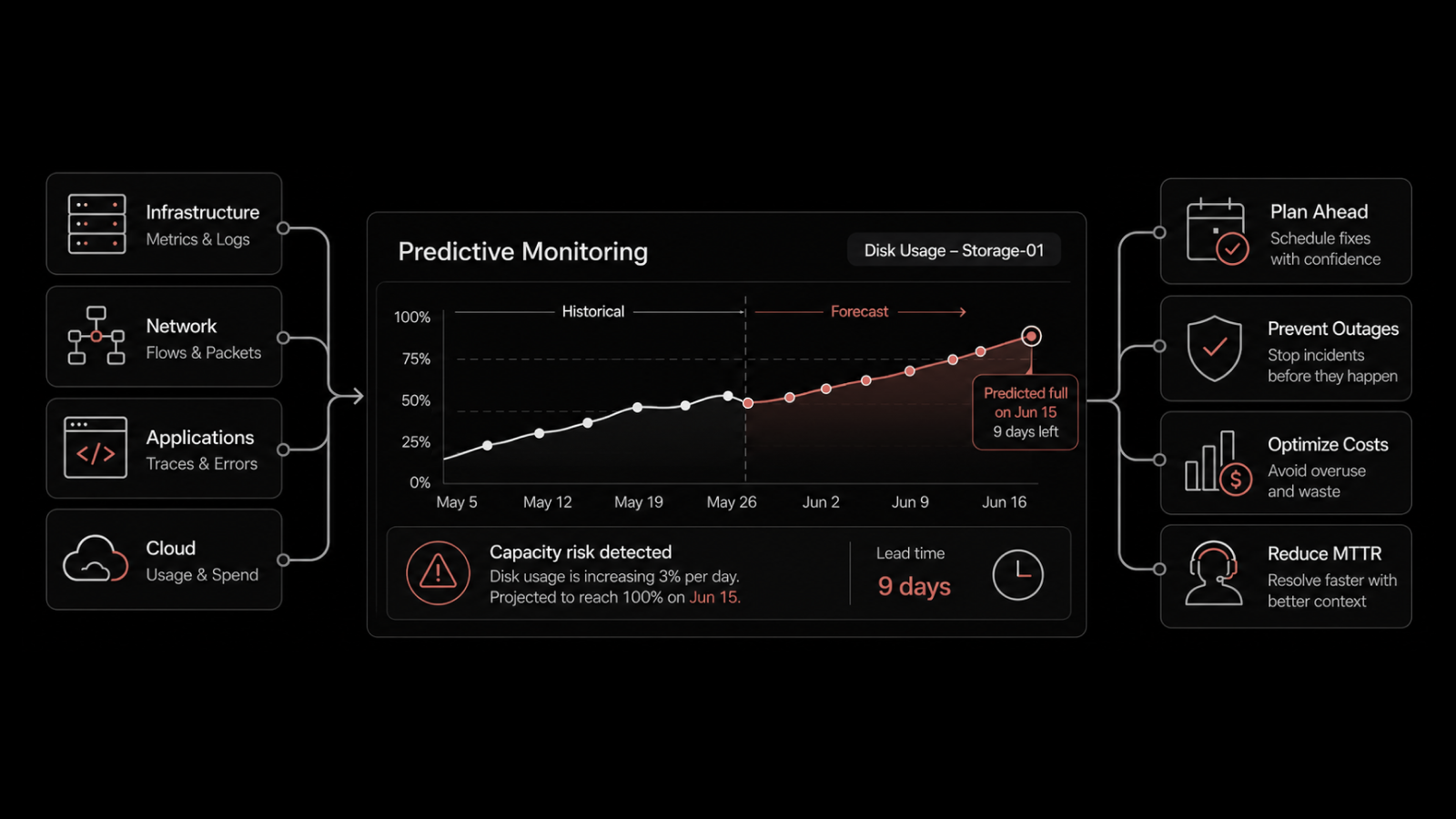
Predictive network monitoring flips this model. By analyzing historical performance data, identifying patterns, and using machine learning to forecast potential failures, predictive monitoring gives your team the lead time to resolve issues before they cause downtime.
Predictive network monitoring is an AI-driven approach that analyzes historical and real-time network performance data to forecast potential failures, congestion, and degradation before they impact cloud service availability.
Common Cloud Network Issues That Cause Downtime
Understanding the failure modes tha ptredictive monitoring addresses is the first step toward eliminating downtime. Each of these issues follows patterns that machine learning models can detect early.
Network Congestion
Congestion occurs when network traffic exceeds available bandwidth capacity. In cloud environments, this often happens during product launches, promotional events, or unexpected traffic surges that overwhelm provisioned resources.
The symptoms are predictable: increased latency, dropped connections, and degraded application performance. What makes congestion dangerous in the cloud is that it can cascade -- one congested network segment affects downstream services, turning a localized issue into a platform-wide slowdown.
Predictive monitoring analyzes traffic patterns over time, identifies peak utilization trends, and alerts teams when current trajectory indicates congestion is likely. This lead time enables preemptive capacity scaling or traffic rerouting before users experience impact.
Latency Spikes
Latency spikes are sudden increases in data transmission delay between cloud components. A cloud application that normally responds in 50ms suddenly takes 500ms, making the user experience noticeably worse.
Causes range from network congestion and routing changes to resource contention on shared infrastructure. Predictive models correlate multiple data points -- resource utilization trends, traffic patterns, and historical spike occurrences -- to identify conditions that typically precede latency increases.
Packet Loss
Packet loss occurs when data packets fail to reach their destination, forcing retransmissions that compound network congestion. In cloud environments, packet loss can result from overloaded network interfaces, misconfigured routing, or hardware degradation.
Predictive monitoring tracks packet loss rates over time, identifies trending increases, and flags conditions (like rising interface utilization) that historically correlate with packet loss events. Teams can then investigate and remediate the root cause -- whether it's a failing network interface, a misconfigured QoS policy, or inadequate bandwidth provisioning -- before loss rates impact application performance.
Hardware Failures
Even in cloud environments, hardware failures happen. Network switches, storage controllers, and compute nodes can fail, especially when shared infrastructure serves multiple tenants. Power supply degradation, disk errors, and memory faults all produce telemetry signatures before complete failure.
Predictive monitoring models detect these early warning signs: gradually increasing error rates, intermittent performance degradation, and anomalous behavior patterns that indicate hardware approaching end of life. This early detection enables planned maintenance rather than emergency incident response.
How Predictive Network Monitoring Works
Predictive network monitoring combines continuous data collection, pattern analysis, and machine learning to transform historical operational data into forward-looking intelligence.
Data Collection and Baseline Establishment
The foundation of predictive monitoring is comprehensive data collection. The system continuously gathers performance metrics from every network component -- bandwidth utilization, latency measurements, error rates, CPU and memory usage, and traffic flow data.
From this data, the system establishes performance baselines: what "normal" looks like for each metric across different time periods (business hours vs. off-hours, weekdays vs. weekends, month-end vs. mid-month). These baselines become the reference points against which the system evaluates current behavior.
Large-scale networks connected through IoT devices and distributed infrastructure generate massive data volumes. Predictive platforms are designed to ingest, process, and analyze this data at scale without introducing monitoring overhead that affects network performance.
Pattern Recognition and Trend Analysis
Machine learning algorithms analyze collected data to identify patterns and trends that human operators might miss. These patterns include:
Cyclical trends: Regular traffic increases every Monday morning, seasonal spikes during holiday periods, or monthly batch processing loads.
Degradation curves: Gradual performance deterioration that indicates equipment aging, capacity exhaustion, or configuration drift.
Correlation patterns: Relationships between seemingly unrelated metrics -- for example, a specific pattern of DNS query failures that precedes application-level timeouts.
The system continuously improves its pattern recognition by incorporating new data and feedback from resolved incidents. Over time, prediction accuracy increases as the model learns the specific behavior characteristics of your network.
Predictive Alerting and Proactive Response
When the system identifies conditions that match known failure patterns or deviate from established baselines, it generates predictive alerts. These alerts differ from traditional threshold-based alerts in a critical way: they fire before the problem impacts users, not after.
A predictive alert might say: "Based on current traffic growth rate and historical patterns, this network segment is projected to exceed capacity in 4 hours." That four-hour lead time lets the operations team scale capacity, reroute traffic, or defer non-critical workloads -- all before any user experiences degradation.
Reporting and Visualization
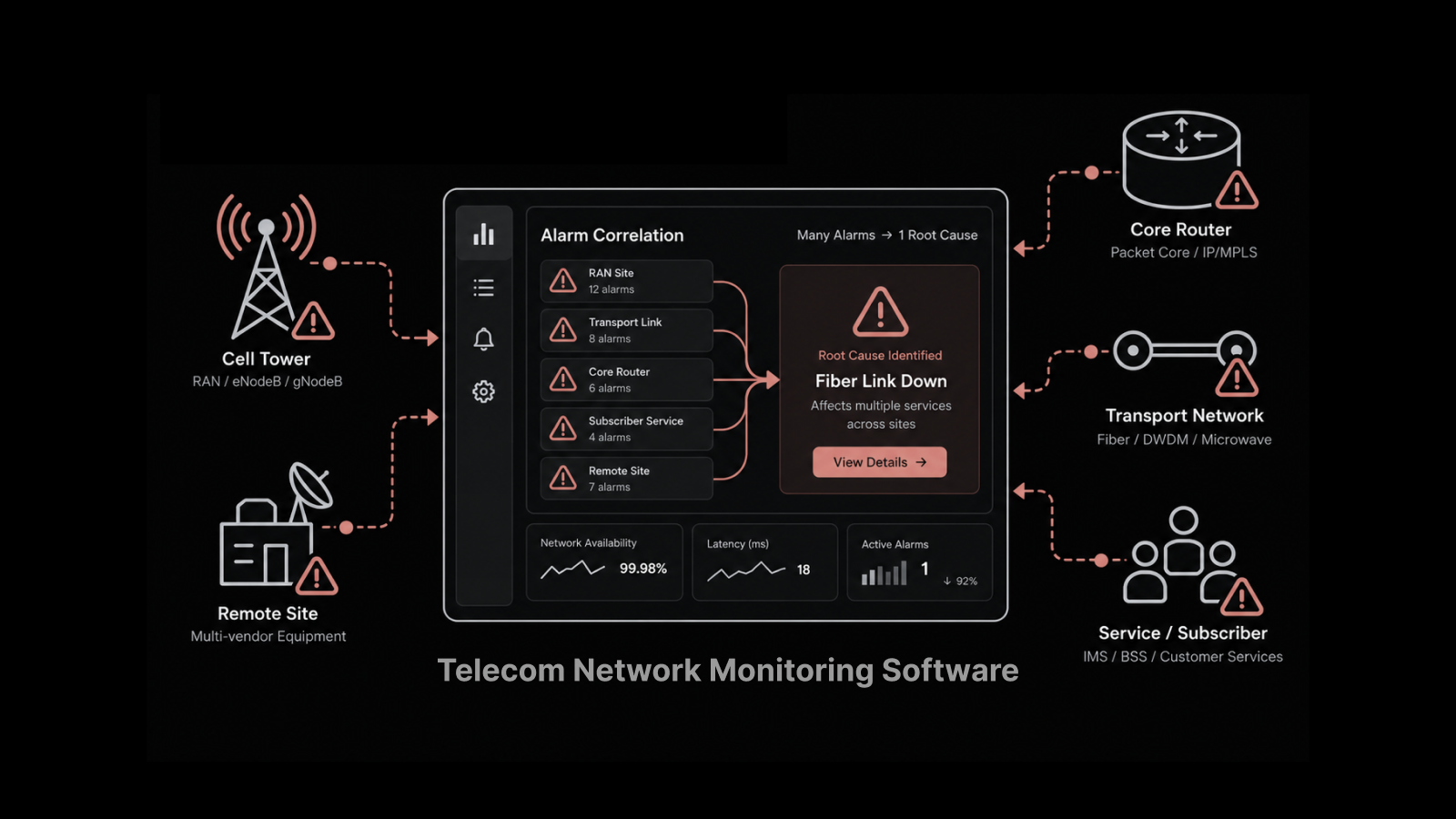
Predictive monitoring platforms provide intuitive dashboards that present complex analytical data in accessible formats. Network administrators can view current health status, predicted risk areas, historical trend data, and recommended actions from a centralized interface.
Comprehensive reporting capabilities support capacity planning, executive communication, and compliance documentation. Teams can demonstrate operational improvements -- reduced downtime, faster incident resolution, and cost savings -- with data rather than anecdotes.
Benefits of Predictive Monitoring for Zero Downtime
Faster Issue Detection and Resolution
Predictive monitoring shifts incident detection from "users report a problem" to "the system identified a potential issue." This earlier detection directly reduces mean time to resolution because teams start investigating before the situation becomes urgent. Engineers working proactively, with time to diagnose and test solutions, resolve issues more effectively than engineers scrambling during an active outage.
Reduced Unplanned Downtime
The entire purpose of predictive monitoring is preventing unplanned outages. By identifying failure precursors and giving teams time to intervene, predictive approaches convert potential outages into planned maintenance windows. Organizations that implement predictive monitoring typically see 40-60% reductions in unplanned downtime within the first year.
Optimized Resource Allocation
Predictive analytics provide deep insights into how network resources are actually being used. Teams can identify underutilized resources that waste budget, overutilized resources at risk of saturation, and usage patterns that inform smarter provisioning decisions.
Rather than over-provisioning "just in case" or under-provisioning to save costs, predictive insights enable right-sized resource allocation that balances performance requirements with budget constraints.
Better Capacity Planning
Historical trend analysis and predictive modeling enable informed capacity planning. Instead of guessing future needs, teams can project resource requirements based on actual growth patterns, seasonal trends, and planned business initiatives. This data-driven approach reduces both the risk of capacity shortfalls and the waste of premature over-investment.
Lower Operational Costs
Reactive incident management is expensive. Emergency response, overtime labor, lost revenue during outages, and SLA penalty payments add up quickly. Predictive monitoring reduces these costs by preventing the incidents that trigger them. Additionally, optimized resource utilization and data-driven capacity planning reduce infrastructure spending.
Improved Decision Making
Real-time and predictive insights enable operations teams to make data-driven decisions about network management. Instead of relying on intuition or waiting for problems to surface, teams have continuous visibility into network health, performance trends, and projected risks. This information supports better operational decisions, more accurate planning, and stronger communication with business stakeholders.
Implementing Predictive Network Monitoring
Selecting the Right Monitoring Platform
The monitoring platform you choose determines how effectively you can implement predictive capabilities. Evaluate platforms based on:
AI and ML capabilities: Does the platform include built-in machine learning for anomaly detection and trend prediction, or does it rely solely on static thresholds?
Data ingestion scale: Can the platform handle the volume of telemetry data your network generates without performance degradation?
Integration ecosystem: Does the platform integrate with your existing cloud providers, network management systems, and incident response workflows?
Predictive accuracy track record: Ask vendors for evidence of prediction accuracy and false-positive rates in environments similar to yours.
Configuring Data Collection Pipelines
Effective prediction requires comprehensive, high-quality data. Configure collection agents on all critical network components, establish appropriate collection intervals (too infrequent misses transient issues; too frequent creates unnecessary load), and ensure data flows reliably to the analytics platform.
Pay particular attention to data normalization -- metrics from different sources and vendors need to be standardized before they can be correlated and analyzed effectively.
Setting Up Predictive Alerts
Design your alerting strategy around actionable predictions. Each predictive alert should include:
What the system has detected (the pattern or anomaly).
The predicted impact if no action is taken.
The confidence level of the prediction.
Recommended remediation steps.
Avoid overwhelming your team with low-confidence predictions. Start with high-confidence, high-impact alerts and expand coverage as the system's models mature and your team builds confidence in the predictions.
Integrating With Cloud Management Tools
Predictive monitoring delivers maximum value when it's connected to your cloud management and automation platforms. Integration enables automated responses -- scaling resources, shifting traffic, triggering runbooks -- based on predictive alerts. This automation reduces the time between prediction and remediation, moving closer to truly autonomous network management.
Achieve Zero Downtime With Motadata
Motadata's AI-native network monitoring platform brings predictive intelligence to your cloud and hybrid infrastructure. With built-in machine learning for anomaly detection, trend forecasting, and automated root cause analysis, Motadata helps your operations team identify and resolve potential issues before they cause downtime. Real-time dashboards, intelligent alerting, and deep integration with your cloud management workflows give you the tools to move from reactive firefighting to proactive network operations. Start a free trial and see how predictive monitoring transforms your approach to network availability.
FAQs
What is zero downtime in cloud services?
Zero downtime refers to maintaining continuous cloud service availability without unplanned interruptions. It's achieved through redundant architecture, failover mechanisms, proactive monitoring, and predictive maintenance that identifies and resolves potential issues before they cause service disruptions. While absolute zero downtime is aspirational, predictive monitoring brings organizations significantly closer by preventing the most common causes of unplanned outages.
What are the biggest challenges to achieving zero downtime?
The primary challenges include network congestion during traffic spikes, latency degradation in distributed systems, packet loss from overloaded interfaces, hardware failures in shared cloud infrastructure, security breaches that force service interruptions, and insufficient capacity planning. Each of these produces early warning signals that predictive monitoring can detect and act on before they escalate to outages.
How does predictive analytics help prevent downtime?
Predictive analytics uses machine learning to analyze historical performance data, identify patterns that precede failures, and forecast potential issues. When the system recognizes conditions that historically led to outages -- rising error rates, capacity trend lines approaching limits, or anomalous traffic patterns -- it alerts teams with enough lead time to take preventive action.
How much does implementing predictive network monitoring cost?
Costs vary based on network scale, feature requirements, and deployment model (cloud-based vs. on-premises). Key cost factors include platform licensing, data storage for historical analytics, and implementation effort. Most organizations find that the reduction in downtime costs, emergency labor, and SLA penalties more than offsets the monitoring platform investment within the first year.
What is the role of AI in predictive network monitoring?
AI powers the core predictive capabilities: establishing performance baselines from historical data, detecting anomalies that deviate from normal patterns, correlating events across multiple data sources, and forecasting future performance based on current trends. Machine learning models continuously improve their accuracy by learning from new data and feedback on resolved incidents, making predictions more reliable over time.
Author
Motadata Team
Content Team
Articles produced collaboratively by our engineering and editorial teams bear the collective authorship of Motadata Team.