Unified Observability: Moving IT Teams from Reactive to Predictive
What does it take to stop an outage before it starts? In many cases, the warning signs are already there, scattered across different monitoring tools, which makes it difficult to see the full picture before issues escalate.
When an incident occurs, engineers often spend valuable time piecing together metrics, logs, traces, and alerts to determine the root cause. Every minute spent investigating extends the outage and increases its business impact.
Unified observability eliminates this fragmentation by bringing every telemetry signal into a single correlated view. With complete context, IT teams can identify root causes faster, reduce MTTR, and increasingly detect and address issues before users are affected.
This guide explains what unified observability is, how it moves teams from reactive monitoring to predictive observability, the components that make it work, its benefits, and how to implement it across your teams.
What is Unified Observability?
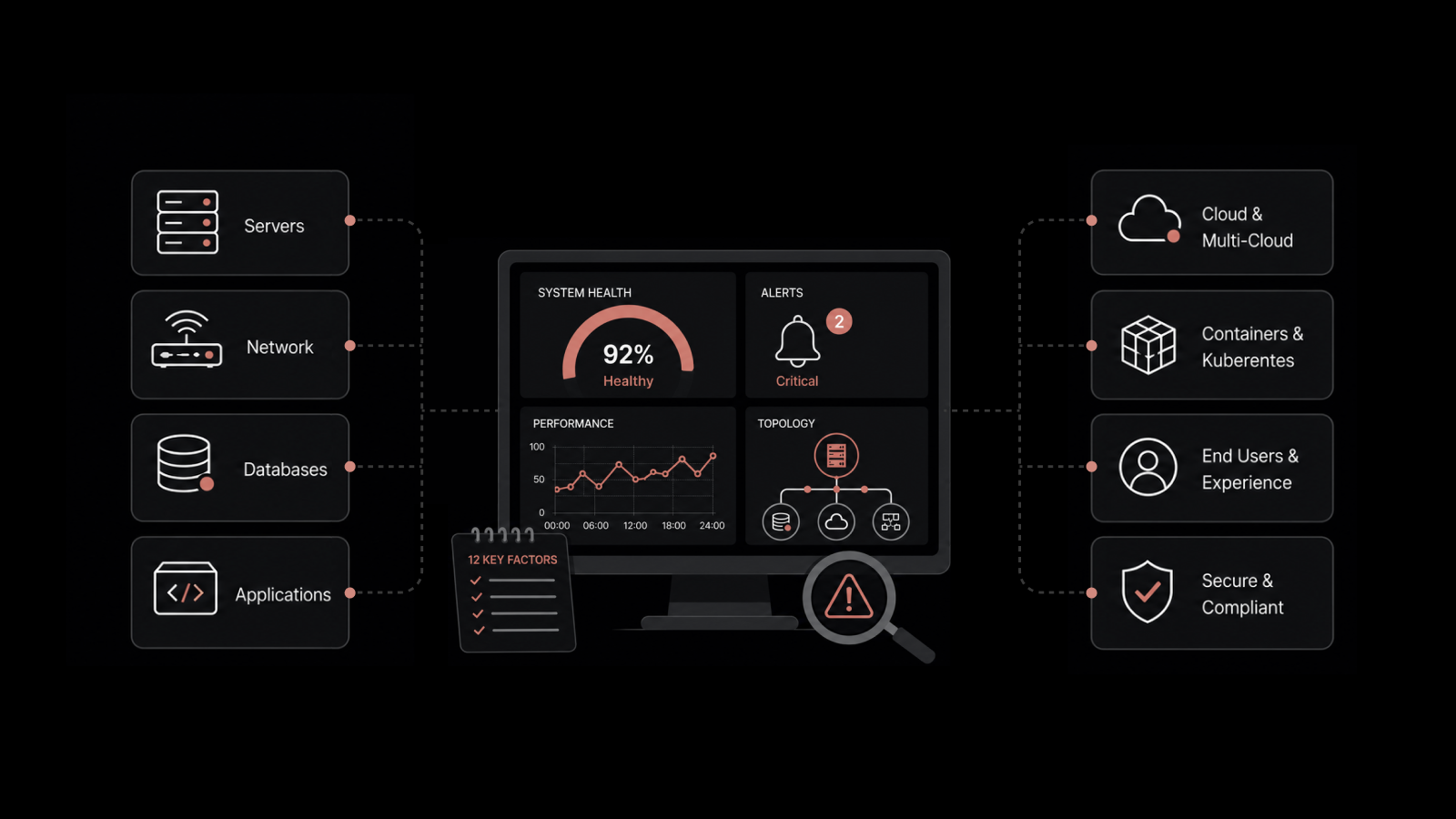
Unified observability is the practice of bringing telemetry from across your IT environment into a single, correlated view instead of leaving it scattered across disconnected tools. It gives IT operations teams end-to-end visibility across applications, infrastructure, networks, and cloud environments, making it easier to understand both what is happening and why.
Instead of collecting more data, unified observability connects the data you already have. By correlating telemetry across the IT stack, it helps teams detect issues sooner, investigate incidents faster, and understand how problems in one system affect another.
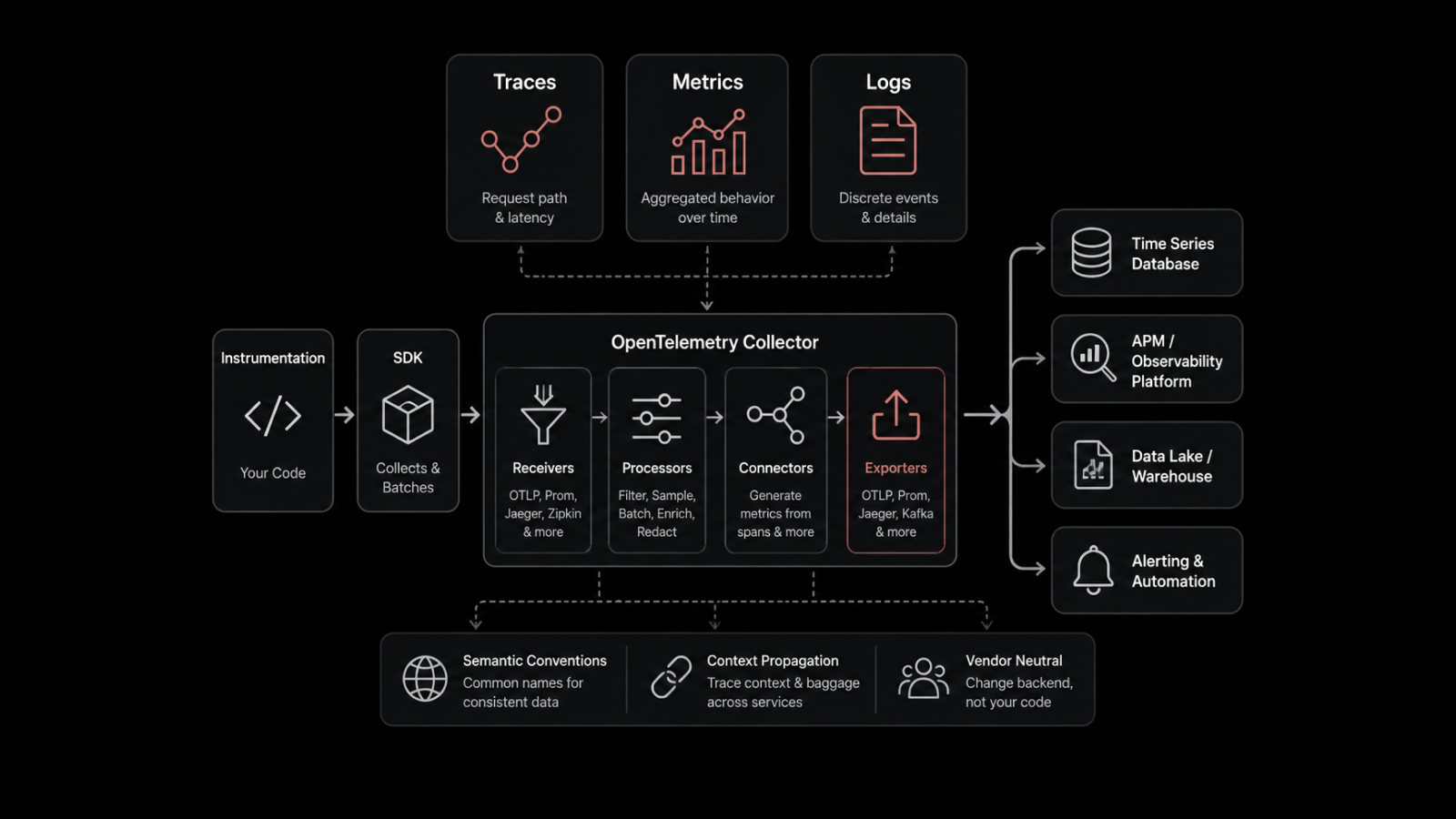
A unified observability platform typically brings together five core telemetry signals:
Metrics: Numeric measurements such as CPU, memory, latency, and error rates
Logs: Timestamped records of system and application events
Traces: The path of a request as it moves across services
Flows: Network traffic between devices, workloads, and endpoints
Topology: A live map of system components and their dependencies
These extend the classic pillars of observability, logs, metrics, and traces, with flows and topology for full-stack context.
Collecting these signals in one place is the first step. The value comes from correlating them to reveal the full context behind an incident. That makes root cause analysis faster and more accurate, which is the key difference between unified observability and traditional monitoring.
Older monitoring tools tell you that something broke. Unified observability, paired with analytics, points to what is likely to break next, which is what moves a team from reacting to predicting.
Why do Reactive Monitoring Approaches Fall Short?
Reactive monitoring falls short because it only tells you about a problem after it has already reached users. By the time an alert fires, the damage to performance, and to trust, is often underway. Three gaps make the reactive model expensive.
1. Fragmented Context Across Siloed Tools
Most IT teams run a separate tool for each layer. One watches servers, another the database, a third the application.
When something breaks, each tool shows its own fragment, and none shows how the pieces connect. Your engineers reconstruct the timeline by hand, which is slow precisely when speed matters most.
2. Slow Root Cause and Rising Downtime Cost
The longer it takes to find the cause, the longer the outage runs. Reactive teams spend most of an incident locating the source, not fixing it, and industry research shows 98% of organizations put downtime above $100,000 per hour.
Add support tickets, lost productivity, and missed transactions, and the cost compounds quickly. This is the part of an outage good tooling can shrink the most.
3. Alert Noise and Team Burnout
Reactive tools tend to alert on everything, which trains engineers to ignore them. When most alerts are false positives, the signal that actually matters gets lost in the noise.
Constant noise leads to alert fatigue, and an exhausted on-call rotation is a risk of its own. It is also how teams miss the early warning and find out from users instead.
These gaps share one root cause: telemetry that lives in separate tools with nothing to connect it. That is the problem unified observability is built to solve.
How is Unified Observability Different from Traditional Monitoring?
Unified observability differs from traditional monitoring mainly in how signals connect. Traditional monitoring runs each layer in its own tool, so context stays fragmented. Unified observability brings every signal into one correlated view, so a problem can be traced across domains instead of one console at a time.
Dimension | Traditional Monitoring | Unified Observability |
Scope | Siloed, tool-specific views | Full-stack, cross-domain visibility |
Data | Metrics, logs, traces in separate tools | Metrics, logs, traces, flows, topology in one place |
Telemetry linkage | Manual stitching between systems | Native correlation via trace IDs and one data store |
Response | Reactive, after failure hits users | Predictive, flags issues before user impact |
Root cause | Manual, slow, tool-hopping | AI-assisted correlation, faster diagnosis |
Alerts | High volume, many false positives | Fewer, analytics-driven alerts |
SLO and SRE practice | Ad hoc, alert-driven response | SLO-driven alerts and error budgets |
Teams | Isolated, separate sources of truth | Shared context across IT, DevOps, security |
The decisive row is response. Monitoring tells you a system is down; observability gives you enough connected context to keep it from going down. If your team already runs to SLOs, unified observability is what binds those targets to live signal and an error budget you can actually track.
What are the Core Components of a Unified Observability Platform?
A unified observability platform is built on five core components that work together, from collecting telemetry to enabling automated action. Understanding them is the difference between buying a dashboard and buying an operating model.
1. Full-Stack Data Collection
Collection is the foundation of unified observability. It gathers metrics, logs, traces, flows, and topology data from applications, infrastructure, networks, cloud, on-premises, containers, and third-party systems.
The goal is complete visibility. You can't detect or investigate issues using data you never collect.
2. Cross-Domain Correlation
Correlation connects telemetry from different sources to provide the full context behind an incident. It links metrics, logs, traces, and dependencies so teams can quickly identify the root cause and understand the impact.
Instead of manually piecing together data from multiple tools, IT teams get a unified view that speeds up investigation and resolution.
3. AI and Predictive Analytics
Analytics transforms telemetry into predictive insights. By using machine learning to establish dynamic baselines, it detects anomalies that static thresholds often miss and forecasts potential performance or capacity issues.
Done well, AI-driven observability warns that a disk will saturate in three days, rather than alerting an hour after it already did. That shift in timing is the whole point of the predictive model.
4. Unified Dashboards
Visualization brings every telemetry signal into a single, shared view. Interactive dashboards let teams move from a high-level health overview to individual services, devices, or requests without losing context.
With all the data in one place, teams spend less time switching between tools and more time resolving incidents.
5. Intelligent Alerting and Incident Response
Alerting and automation ensure teams focus on the incidents that matter most. Instead of generating alerts for every threshold breach, a unified observability platform correlates related events into a single incident, prioritizes them based on impact, and can trigger automated workflows for known issues.
The result is less alert noise, faster response times, and more efficient incident management.
How does Unified Observability Shift Teams from Reactive to Predictive?
Unified observability shifts teams from reactive to predictive by connecting enough signal history to catch trouble while it is still forming. According to the Uptime Institute's 2024 outage analysis, four in five organizations say their most recent serious outage could have been prevented, because the warning signs existed but sat scattered across tools.
The change is clearest in how an incident unfolds. Under the reactive model, a 3 a.m. page sends the on-call engineer hunting:
Open the metrics console, then the log search, then the tracing tool
Start a bridge call to compare what each tool shows
Watch the outage run the whole time
Under unified observability, that same alert arrives with the correlated trace, the relevant logs, and the infrastructure spike already attached. The investigation begins where it used to end, and the anomaly is often flagged before the page ever fires.
This is the substance behind predictive IT operations: less time chasing incidents, more time preventing them.
The effect is sharpest in large, regulated estates. Organizations like Central Bank of India and Nuvoco Vistas run sprawling hybrid environments where siloed tools struggle, and where consolidating every signal onto one platform changes how quickly teams connect a network event to its effect on a business service. When every domain reads from one source of evidence, two separate investigations become one.
What are the Benefits of Unified Observability for IT Teams?
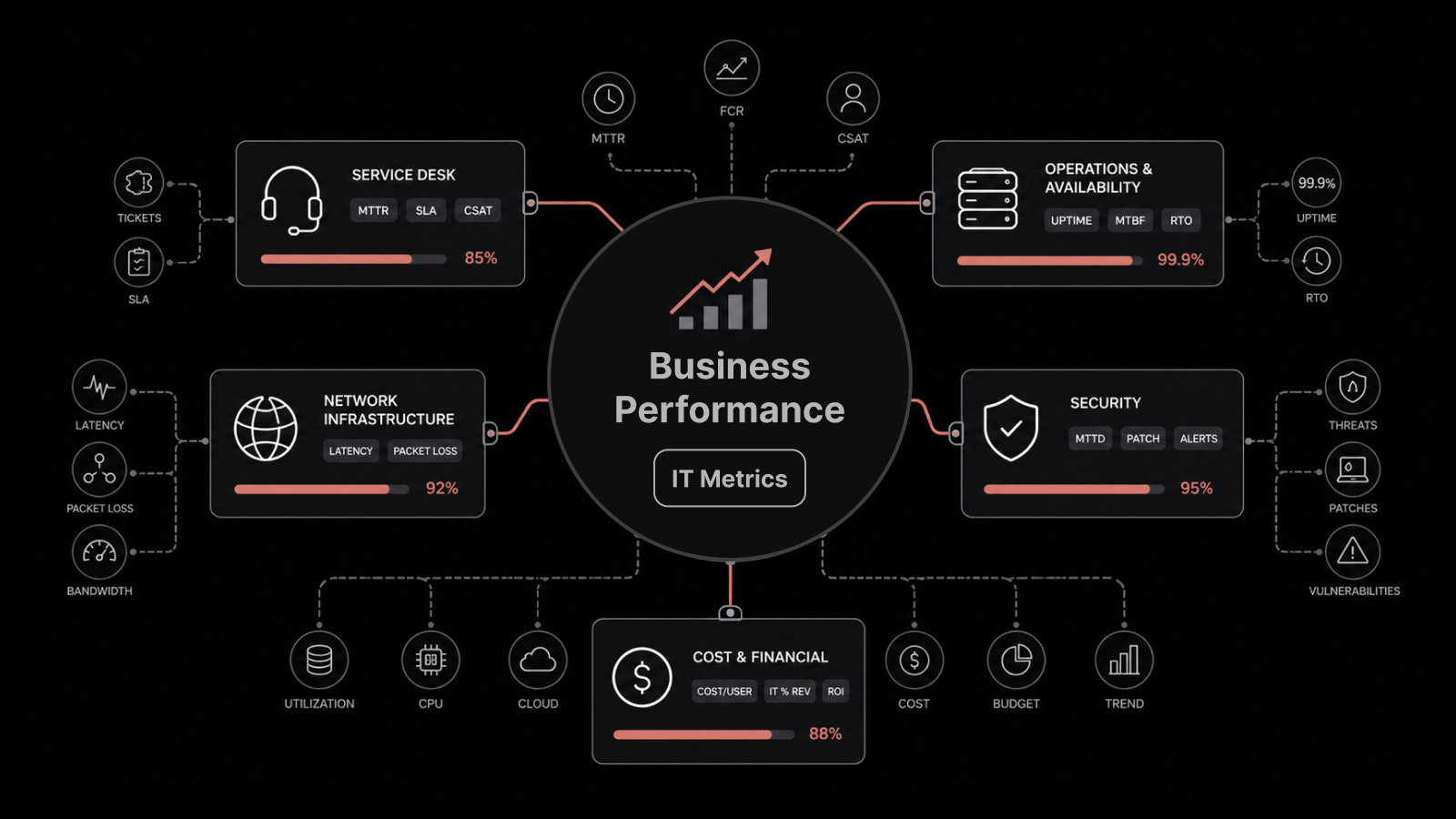
Unified observability pays back in five areas IT leaders can measure: resolution speed, alert quality, collaboration, cost, and user experience. Each one traces directly to having correlated data in one place.
1. Faster Issue Resolution
When metrics, logs, traces, and dependencies are already correlated, teams can identify root causes much faster. Less time spent investigating means shorter outages and lower mean time to resolution (MTTR).
2. Fewer, More Meaningful Alerts
By correlating related events and prioritizing alerts based on business impact, unified observability reduces alert fatigue. With fewer false positives and duplicate alerts, teams can focus on the incidents that truly require attention.
3. Better Cross-Team Collaboration
A shared view of the IT environment gives operations, DevOps, network, and security teams the same context during an incident. This reduces handoff delays, improves collaboration, and speeds up resolution.
4. Lower Operational Costs
Replacing multiple point solutions with a unified platform reduces licensing costs, simplifies integrations, and lowers the effort required to manage monitoring tools, resulting in a more efficient observability stack.
5. Improved Uptime and User Experience
Early detection and proactive issue resolution help prevent incidents before they affect users. Fewer disruptions lead to higher service availability, better user experiences, and greater business continuity.
How do you Implement Unified Observability Across Teams?
Implementing unified observability works best as a phased rollout, not a single cutover. These six steps keep the transition controlled and the early wins visible.
1. Audit Your Current Monitoring Stack
Start by listing every monitoring tool in use and exactly what each one covers. Look for overlap, blind spots, and the manual work your team does to connect them. That inventory tells you what to retire, what to keep, and where correlation is missing today.
2. Decide What You Need to Correlate
Start with your most critical services instead of trying to monitor everything at once. Map the metrics, logs, traces, and dependencies that matter most for each service to ensure meaningful correlation while keeping costs and alert noise under control.
3. Consolidate Data Collection Across Cloud and On-Prem
Bring metrics, logs, traces, flows, and topology into one pipeline that spans both cloud and on-premises. Disconnected tools struggle most when data spans multiple platforms, so this step returns the most value across multi-cloud and hybrid environments.
4. Choose a Unified Observability Platform
Choosing the right platform is as important as adopting the right approach. Look for end-to-end visibility, native correlation across telemetry, AI-powered analytics, automation, and deployment options that fit your environment.
Motadata ObserveOps brings metrics, logs, traces, flows, and topology into a single platform, correlating telemetry with AI-driven analytics to accelerate root cause analysis and proactive issue detection. It supports flexible deployment across cloud, on-premises, and hybrid environments, with native integration into Motadata ServiceOps for streamlined incident management.
If your goal is to consolidate multiple monitoring tools into a unified observability platform, ObserveOps is designed for that purpose. For organizations monitoring only a single layer, a specialized point solution may be sufficient.
5. Break Down Team Silos
A shared platform works best when teams share both visibility and responsibility. Give IT, DevOps, and security access to the same dashboards, and define clear ownership for alerts, incidents, and automated workflows.
6. Use Predictive Insights for Capacity Planning
Once your data is unified, use predictive analytics to forecast capacity planning , optimize resources, and address potential issues before they become incidents. This is where observability evolves from operational monitoring to strategic decision-making.
What does the Future of Unified Observability Look Like?
Unified observability is evolving toward autonomous operations. Modern platforms increasingly detect root causes, trigger remediation workflows, and verify the outcome with minimal human intervention.
At the same time, observability is expanding to support edge environments, IoT, and 5G workloads while bringing security and performance telemetry together in a single platform. This gives IT teams broader visibility across increasingly distributed environments.
These advances all rely on the same foundation: unified, correlated telemetry. Organizations that invest in observability today are building the data foundation for more intelligent, automated IT operations tomorrow.
Build Unified Observability with Motadata
Unified observability is the foundation of proactive IT operations. By bringing metrics, logs, traces, flows, and topology into a single correlated view, platforms like Motadata ObserveOps help teams detect issues earlier, accelerate root cause analysis, and move toward predictive operations.
The transition from reactive to predictive takes time. It requires consolidating tools, connecting telemetry, and aligning teams around a shared view of the environment. But the payoff is lasting: fewer visibility gaps, faster incident resolution, and more resilient IT operations.
See how Motadata ObserveOps can help you unify observability and reduce incident response times.
FAQs
What is a unified observability platform?
A unified observability platform is the software collects, correlates, and analyzes all your telemetry together: metrics, logs, traces, flows, and topology. It replaces a stack of point tools with one system that handles full-stack data, AI-driven analysis, dashboards, and intelligent alerting, usually across cloud and on-premises environments.
How is unified observability different from monitoring?
Traditional monitoring runs a separate tool for each layer, so signals stay siloed. Unified observability correlates metrics, logs, traces, flows, and topology in one view, so you can trace an issue across systems instead of one tool at a time. The difference is correlation, not just collection.
Can observability predict failures before they happen?
Yes, when it pairs unified data with analytics. By learning normal behavior across your environment, the platform flags anomalies and forecasts issues such as a disk filling or latency climbing before they become outages. The quality of prediction depends on the breadth of data behind it, which is why unified collection matters.
What is predictive observability?
Predictive observability uses AI and machine learning on your correlated telemetry to flag anomalies and forecast issues before they cause an outage. Instead of alerting after a failure, it learns normal behavior and warns you when metrics drift toward a problem, such as a disk filling or latency climbing.
What should you look for in a unified observability platform?
Look for full-stack coverage across applications, infrastructure, and networks, native correlation between signal types, AI-driven analytics, and deployment options that fit your environment. For hybrid or regulated setups, check for on-prem support, role-based access, and audit trails.
Author
Poonam Lalani
Content Strategist
Poonam Lalani is a B2B content strategist and writer with a background in computer engineering and experience across enterprise technology domains, including AI, cloud, DevOps, data engineering, and IT operations. She specializes in creating research-driven content that simplifies complex ideas and supports product education, thought leadership, and business growth.